This Is Not a Story About Religion Alone
When people ask why Kesariyaji is not fully in Digambar Jain hands today, they often expect a religious answer. The truth is far more uncomfortable. This is a story about political power, administrative cunning, one critical mistake, and a democratic system in which a small Jain minority - however right they are on historical evidence - simply does not have enough votes to matter.
Understanding how Digambar Jains lost control of their own most sacred tirth requires going back to the beginning - to who built this temple, who managed it, and precisely how it slipped away.
Part 1 : The Foundation: A Temple Built, Managed and Consecrated by Digambar Jains
Three Bhattaraka Gaddis, One Temple
Kesariyaji was not just associated with Digambar Jainism - it was the seat of three separate Digambar Jain Bhattaraka lineages, each of which held authority over different parts of the temple complex:
Moolsangh Balaatkar Gana, Idar Shakha - the most prominent Bhattaraka lineage in western India, whose Bhattarakas supervised the installation of numerous idols in the 52 Jinalayas from VS 1611 onwards. Bhattaraka Shubhchandra of this lineage installed multiple idols in the Khela Mandap in VS 1611 (1554 CE). The lineage's Bhattaraka Chandrakeerti later installed the Chaturvinshati Jina Paduka in VS 1832 (1775 CE), which still stand today near Marudevi's elephant.
Kashthasangh Nanditat Gaccha - whose Bhattarakas held the southern portion of the temple. Bhattaraka Surendrakeerti of this lineage supervised the construction of devkulikas in VS 1753 (1696 CE), and the inscription from that year names the complete lineage preceding him. The Kashthasangh Bhattaraka's gaddi - the physical throne from which Bhattarakas conducted religious discourse - was present in the southern Jinalayas of Kesariyaji.
Mathursangh - whose Bhattarakas held authority over the Sabha Mandap's reading seat in the northern section of the temple. This seat, used for Bhattaraka Shashtra-reading, was their designated area within the temple complex - until VS 1969 (Vikram Samvat), when a temporary administrator changed the inscription on this seat overnight, under the pretext of repair, to read "Shri Madbhagwat" - a Hindu text - replacing what had been a Digambar Jain identification.
Three separate Digambar lineages. Three distinct sections of the same temple. All Digambar. This is not one family's claim - it is the institutional bedrock of the temple's entire history.
The Oldest Inscription Is Digambar — and It Speaks for Itself
The oldest surviving inscription at Kesariyaji is carved on the north wall of the Khela Mandap. It dates to Vikram Samvat 1431 - 1374 CE - and it leaves no room for ambiguity.
It records that the garbhagriha shikhara and the Khela Mandap were renovated under the direct guidance of Bhattaraka Shri Dharmakeerti of the Kashthasangh, a Digambar Jain monastic institution. The renovation work was carried out by Shah Hardas, his wife Haru, and their sons Punja and Kota.
This inscription precedes any Shwetambar association with the temple by centuries. It confirms that as early as 1374 CE - and the renovation language implies the temple was already old enough to need major restoration - the innermost sanctum of Kesariyaji was under the authority of a Digambar Bhattaraka.
After this, an unbroken chain of Digambar inscriptions continues - VS 1572, VS 1611, VS 1652, VS 1734, VS 1753, VS 1754, VS 1863 - each one naming Digambar Bhattarakas and Digambar shravak families as the builders, renovators, and administrators of this tirth. A total of 18 Digambar Bhattarakas presided over Kesariyaji from VS 1450 to VS 1863 - more than 400 years of continuous, documented, institutional Digambar management.
For approximately 650 years, from the earliest inscription to the point where control began to slip, not a single Shwetambar Bhattaraka, Acharya, or institution is named in any construction or renovation record at Kesariyaji.
Part 2 : The Infiltration: How Shwetambars Entered the Mewar Administration
Power Through the Court, Not Through Merit
Kesariyaji is located in Mewar, which's the old kingdom of the Maharanas of Udaipur. The Maharanas always treated the temple and its Digambar Jain caretakers with respect. They let the Digambar Bhattarakas take care of the temple.
Things started to change when Shwetambar Jain businessmen and families became very influential in the Mewar state government. They got rich and smart about business. They knew people in high places. By the 1800s some Shwetambar Jains were ministers in the Mewar court. These were jobs that gave them a lot of power over what the state did including what happened with temples and religion.
When the Mewar state took over the management of the Kesariyaji temple it was like the fox was already in charge of the chickens. Important jobs in the department that controlled the temple were slowly given to Shwetambar Jains. They were in charge of the day-to-day stuff the money and who could come into the temple. The Digambar Bhattarakas, who were in charge of the temple for a time were slowly pushed out of power even though they were still supposed to be in charge of the religious stuff.
Everything was ready to go. All it took was one event to make the Shwetambar Jains think they owned the Kesariyaji temple. The Shwetambar Jains were already, in charge of a lot of things. The Kesariyaji temple was a big part of that. The Shwetambar Jains and the Kesariyaji temple were connected in a way.
Part 3 : The Mistake That Changed Everything
Maharana Jawan Singh and the Dhwajadand of Jorawarmal Bafna
Here is the moment that historians of Kesariyaji talk about as the turning point.. It is a hard one because it did not happen because of force. It happened because it was allowed to happen.
During the time when Maharana Jawan Singh ruled Mewar, a known Shwetambar merchant named Jorawarmal of the Bafna gotra was given special VIP treatment at the Kesariyaji temple. As a way to show how important he was and to acknowledge his position in the Mewar court he was allowed to put up a Dhwajadand ( flagpole) on the temple shikhara.
This was a honour. The kind that was given to big donors and important people in the old feudal system. For Jorawarmal and the Shwetambar community however it meant more than ceremony. Putting up a Dhwajadand on the shikhara of a temple is, according to religious tradition an act that shows control over that temple. It is what communities do at their holy places on their own special days.
Once a Shwetambar had put up a Dhwajadand at Kesariyaji. Even if it was a one-time ceremonial act allowed by a Maharana. The argument could be made and was made that Shwetambars had religious importance at this holy place. That the Dhwajadand itself was an action. That the temple was therefore not Digambar.
This was the mistake. The Digambar community without the power and influence that the Shwetambar community had built over many years did not. Or could not. Stop this from happening.. Once it happened Shwetambar claims went from being quiet and administrative to being open and strong.
It is important to say the problem was not all from outside. The Digambar communitys failure to stand together and fight against Shwetambar influence, in the court during this time allowed a small ceremony to become an example. That example would be used against them for the hundred years.
Part 4 : The Violence: 4 May 1927
What the Dhwajadand of Jorawarmal Led To
Having set a example. Even if it was an one. Of Shwetambar involvement in the most important religious activities at the temple the Shwetambar officials who worked within the Mewar Devasthan administration became more confident.
On 4 May 1927, on the day of Akshay Tritiya, Shwetambar officials. Using their roles in the Mewar state administration and without the Maharana knowing or giving permission. Tried to:
- Put a mukut (crown) kundal (earrings). Chakshu (eyes)* on the Digambar Tirthankara idols in the garbhagriha
- Raise a Dhwajadand on the main shikhara
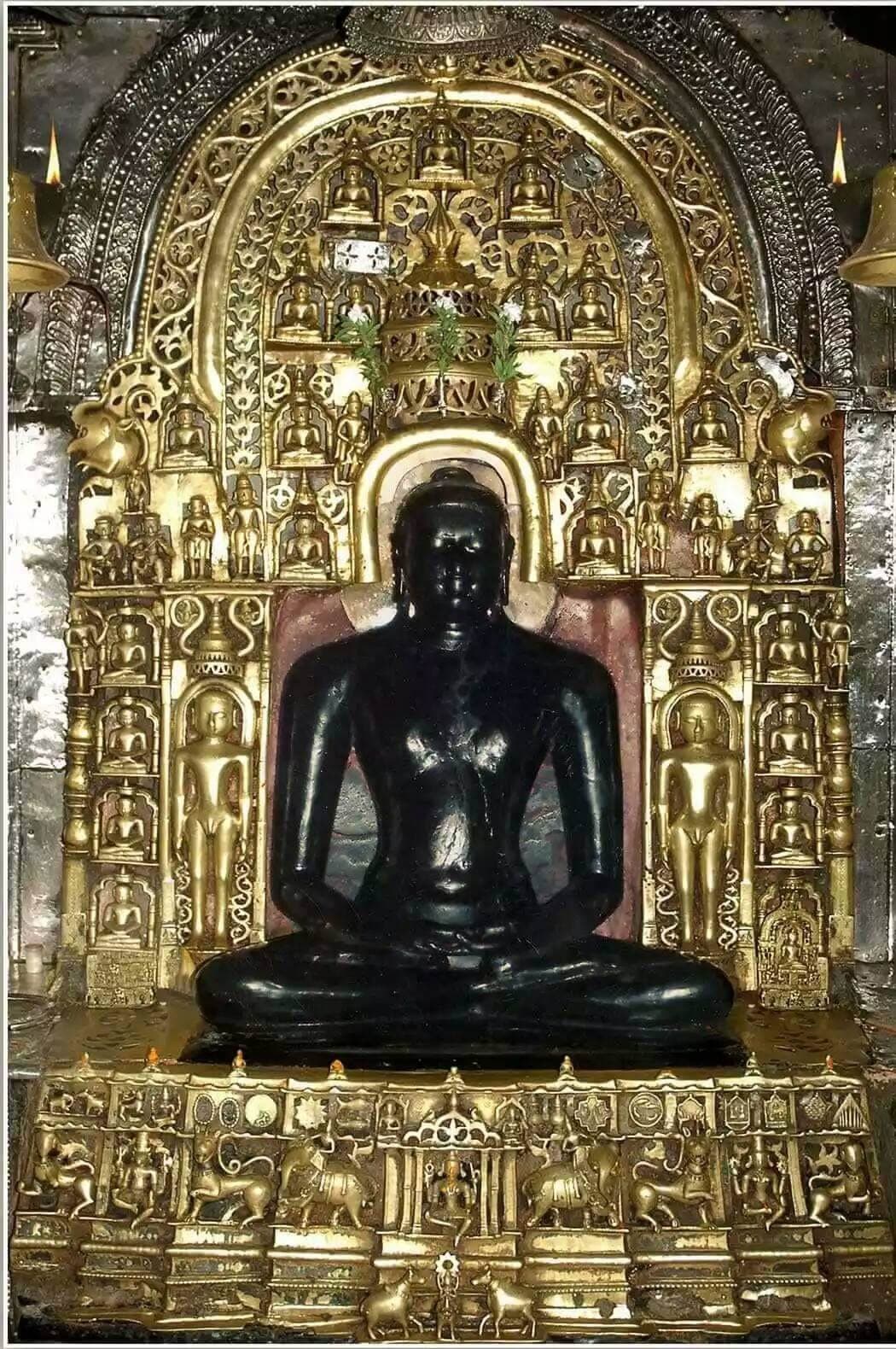
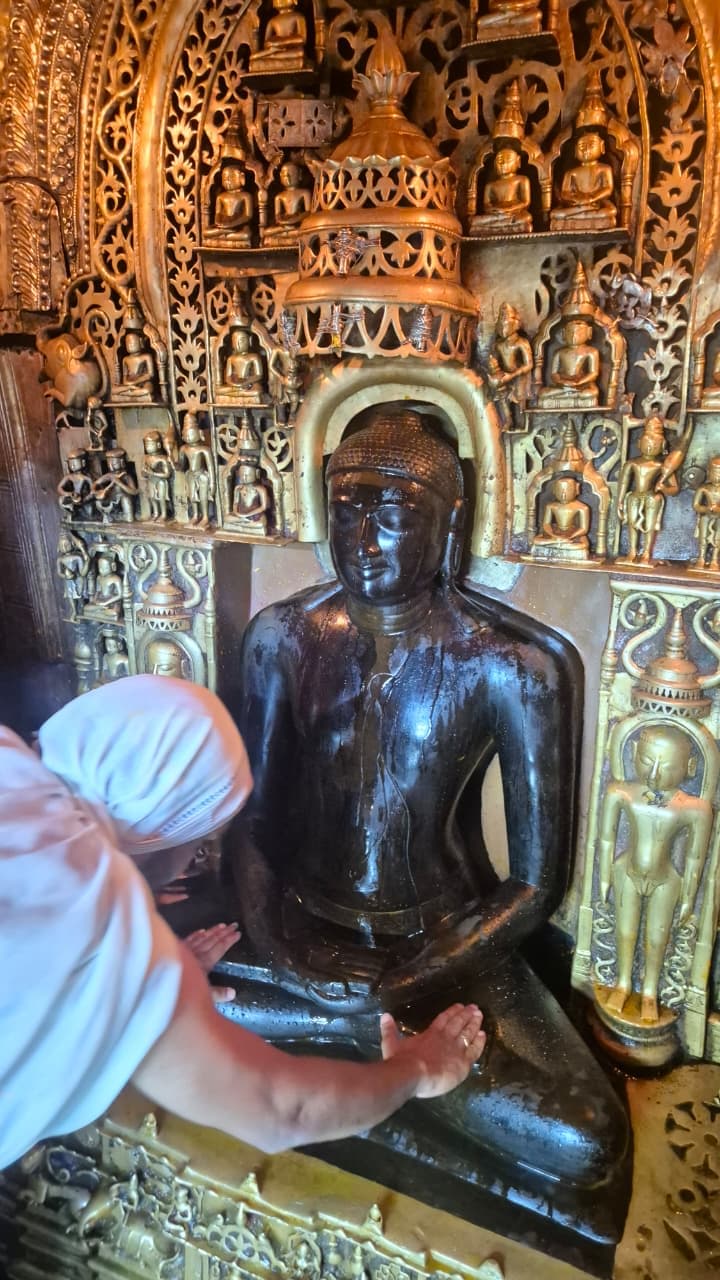
To see why this was a religious attack you need to know what these actions mean. The main idol at Kesariyaji is a naked Digambar idol*. Veetaragi, not decorated, in the true Digambar tradition. Putting jewelry on it is not a way to decorate. It is changing a Digambar image into a Shwetambar version. It is physically changing the identity of the idol.
Many Digambar Jains came together in protest. A group reminded the officials about the Maharanas past orders that stopped such actions. The officials, supported by state soldiers and encouraged by the Dhwajadand example did not back off.
The soldiers were told to attack the Digambar group. Using wooden sticks that were being used for a nearby yagna and the ends of their guns. The attack took place inside the temple grounds.
Four Digambar Jains died:
- Pandit Girdharilal, Sagar, Madhya Pradesh
- Shri Deepchand Nagda, Parsad, Udaipur
- Shri Punamchand Nagda, Parsad, Udaipur
- Shri Manakchandji Narsinghpura, Semari, Udaipur
150 people were hurt, with 44 seriously injured. Their bodies stayed inside the temple all night. The team that did the postmortems did not arrive until the day.
After the deaths the temple doors were shut and a Dhwajadand was quickly put up on the shikhara on 6 May 1927. Without any ceremony, without any approval. This flagpole fell down by itself not after.
The Commission That Told the Truth - and Was Edited
The Mewar government, under public pressure, constituted the Dhwajadand Commission with four members: Raja Amar Singh Banoda, C.V.C. Trench, B.L. Bhattacharya, and O.R.M. Annani. The Digambar side's legal team included Mr. M.A. Jinnah.
The commission reviewed all the temple's inscriptions and submitted its report on 10 April 1935. Its original finding: Kesariyaji is "moolatan Digambar Jain mandir" — fundamentally a Digambar Jain temple.
The five officials responsible for the killings — Vardichand Anchaliya, Roshanlal Chatur, Devilal Mehta, Lakshmansingh Mehta, and Subedar Tejsingh — were found guilty, fined, and dismissed from Mewar state service.
But when the report was published on 5 June 1947 — 12 years after it was submitted — the word "Digambar" had been quietly removed under Shwetambar political pressure. The published version said only "Jain temple." The commission's own conclusion about who the temple originally belonged to had been erased before the public ever read it.
Part 5 : The Legal Battle: Decades in Court
The High Court Case — Won by Deception
With the Hatyakand, the killings, and the administrative apparatus all pointing toward Shwetambar dominance, the Shwetambar community took their claim to court. When they filed their case before the Rajasthan High Court in 1966, they employed a tactic that is, in retrospect, their most effective move in this entire saga:
They deliberately did not make the Digambar Jain community a party to the case.
There was no Digambar lawyer in court to present the inscriptional evidence. No one to show the HC the VS 1431 inscription naming a Digambar Bhattaraka as the renovator of the garbhagriha. No one to explain the 18 Bhattarakas, the three Bhattaraka gaddis, the 16 dreams on the idol platform. Hearing only one side, the HC ruled in the Shwetambar community's favour.
The Supreme Court — The Right Answer, Too Late
The Digambar community, learning of the judgment, appealed to the **Supreme Court of India**. The Supreme Court heard both sides. The Supreme Court looked at the evidence.
In judgments of **14 September 1973**, **4 January 2007**, and **26 July 2010**, the Supreme Court of India declared Kesariyaji a **Jain temple** and directed that its management and control be handed over to the Jain community. It directed the Rajasthan state government to form a management committee under the Rajasthan Public Trust Act and resolve the Digambar-Shwetambar disputes.
Three Supreme Court judgments. Three times the highest court in India pointed in the right direction.
The Rajasthan state government did not comply.
Part 6 : Why the Temple Was Never Returned: The Vote Bank Reality
The Arithmetic of Democracy Against a Minority
Bhil and Adivasi communities of southern Rajasthan have a deep connection with Rishabhdev. They call the deity "Kalaji" and consider him a manifestation of their own traditions. Lakhs of Bhil pilgrims visit every year. The fair at Janm Kalyanak on Chaitra Krishna Navami draws enormous crowds — predominantly non-Jain and Adivasi.
Hindu communities visit the temple in numbers. They think the deity is a form of Vishnu or Shiva.. This is not true. It is a rumour that was spread on purpose. The Pandas and Poojaris who work at the temple started this rumour. They do this because they want to keep their jobs and the money they get from the temple.
The Supreme Court said the Jain community should take care of the temple.. If that happens the Pandas will not get any money. They will not be able to collect money from visitors. They will not get a salary. Be government employees. So they tell Hindu visitors that the idol is "Kalaji" or "Shiva" or "Vishnu". They do this to get visitors and more money.
The Pandas do not want the Jain community to take over the temple. They want to keep the temple under government control. They want Hindu and Adivasi visitors to think the deity belongs to them. This is why they keep spreading the rumour. They are the ones who talk the most at the temple. They want to keep their jobs and the money they get.
Lord Rishabhdev is a Jain Tirthankara. He is not a Hindu deity. No one who knows about this disagrees.. The Pandas tell visitors something else. They do this because it is good, for their business. They get money from visitors. If the Jain community takes over the Pandas will lose their money and their jobs.
Now look at the political calculation for any Rajasthan state government: hand control of this temple to the Jain community — a population that constitutes roughly 1-2% of the state — and risk alienating millions of Adivasi and Hindu voters for whom this temple is also religiously significant. Or keep the temple under the government's Devasthan Vibhag, where all communities feel it is "accessible," and maintain political peace.
The Supreme Court orders have existed since 1973. More than fifty years have passed. The temple remains under the Rajasthan Devasthan Vibhag.
No government — Congress or BJP, state or central — has found it politically worthwhile to implement the Supreme Court's directive and hand the management of Kesariyaji to the Jain community. The Jain vote bank, spread thin across constituencies, does not swing enough seats to make compliance worth the political cost.
This is the real reason Kesariyaji is not in Jain hands today. Not because the evidence is unclear. Not because the Supreme Court was ambiguous. But because in Indian democracy, minority religious rights — however clearly established in law — tend to yield to majority political arithmetic.
Part 7 : What Has Been Lost
The Daily Humiliation of the Digambar Swaroop
The visible consequence of this history for a Digambar Jain pilgrim visiting Kesariyaji today is this:
The mulnayak idol of Bhagwan Rishabhdev. A naked Digambar idol. Can only be seen in its original Digambar form twice a day during the morning and afternoon abhishek. At all times the idol is covered. Draped in the manner that the current administrative arrangement permits. A 1,200-year-old Digambar idol in a temple built by Digambar Bhattarakas with Digambar inscriptions on its walls can only be seen as a Digambar idol for windows each day.
The Nau-Chouki Vedi. Where the local Digambar Jain community performs its prescribed puja. Is located outside the Khela Mandap, not in the primary worship space of the temple. The Digambar community worships at a vedi in a mandap of its own most ancient tirth.
The Sabha Mandaps Digambar Bhattaraka reading-seat inscription was changed to "Shri Madbhagwat" overnight. A Digambar Bhattarakas gaddi in a Digambar temple was re-labelled with a Hindu scriptures name in a nights "repair work."
These are not legal losses. They are daily, visible lived indignities, for Digambar Jains who come to worship at Kesariyaji.
The Sequence That Explains Everything
To understand how we got here follow this sequence:
1,200 years. Digambar Jains build, manage, renovate and worship at Kesariyaji under three Bhattaraka lineages
VS 1431 (1374 CE). Oldest inscription confirms Digambar Bhattaraka renovated the garbhagriha
Century. Shwetambar community gains influence in Mewar court through commerce and courtly relationships
Maharana Jawan Singhs reign. Jorawarmal Bafna (Shwetambar, VIP) permitted to hoist Dhwajadand as a honour. The mistake that opened the door
After Jorawarmals Dhwajadand. Shwetambars begin claiming the temple is theirs because "a Shwetambar hoisted the flag"
4 May 1927. Dhwajadand Hatyakand: Shwetambar officials attempt to crown and decorate Digambar idols; 4 Digambars killed by state troops inside the temple
1935. Dhwajadand Commission concludes temple is "moolatan Digambar Jain mandir"; word "Digambar" removed before 1947 publication
1966. Shwetambars win Rajasthan HC case by keeping Digambars out of it
1973, 2007, 2010. Supreme Court of India overrules HC declares it a Jain temple directs management handover to Jains
Today. Temple remains under Rajasthan Devasthan Vibhag; government has not complied with Supreme Court for, over 50 years; Digambar swaroop darshan available twice daily. The administration and pujaris don't know how to worship a Jain Idol.
What Needs to Happen
The way to get justice for Kesariyaji is easy to see when you look at the law. It is not so easy to see when you look at politics.
The Supreme Court said what needs to be done. The government of Rajasthan has had over fifty years to do what the court said in 1973. The court reminded them again in 2007 and 2010. This is not a question. It is a simple one. The question is will the government listen to the court in the land when it is about a small group of people who do not have many votes.
The Digambar Jain community needs to work. Something that keeps happening in the story of Kesariyaji is that the Digambar Jain groups in places like Maharashtra, Karnataka, Madhya Pradesh, Gujarat and Rajasthan do not work together in a strong and coordinated way. The Hatyakand Commission had to hire lawyers from outside to help them. The court case was won because the other side did not show up. This way of doing something when something happens instead of being ready and doing something first has hurt the community a lot.
The mulnayak idol should be seen all the time. The fact that the naked Digambar Tirthankara idol, in the Digambar temple can only be seen without covering twice a day is a symbol of everything that has gone wrong. Until people can see the Digambar swaroop all day the main problem has not been fixed. The mulnayak idol should be seen as it was meant to be seen.
Conclusion: The Tirth That Waits
Kesariyaji has been waiting for justice for than a hundred years. The writing on its walls is still the same. The writing from 1374 still says a Digambar Bhattaraka fixed the part of the temple. The sixteen dreams of Marudevi, on the platform are still sixteen. They are not fourteen. The Supreme Court of India has said three times that it is a Jain temple.
The people who go to the temple know what it is. The old records know what it is. The Supreme Court knows what it is.
What is missing is that the government is not doing what everyone knows is right.
Bhagwan Rishabhdev, the Jain teacher the lord of Kesariyaji taught us about being good and following rules. It is funny that his own temple is being held back by the government even though the Supreme Court has said what to do. This is something that every Digambar Jain thinks about when they visit the temple.
The Kesariyaji or Rishabhdev temple is Digambar only. It has always been. Someday because of the law and because people are working together and not giving up it will be again.