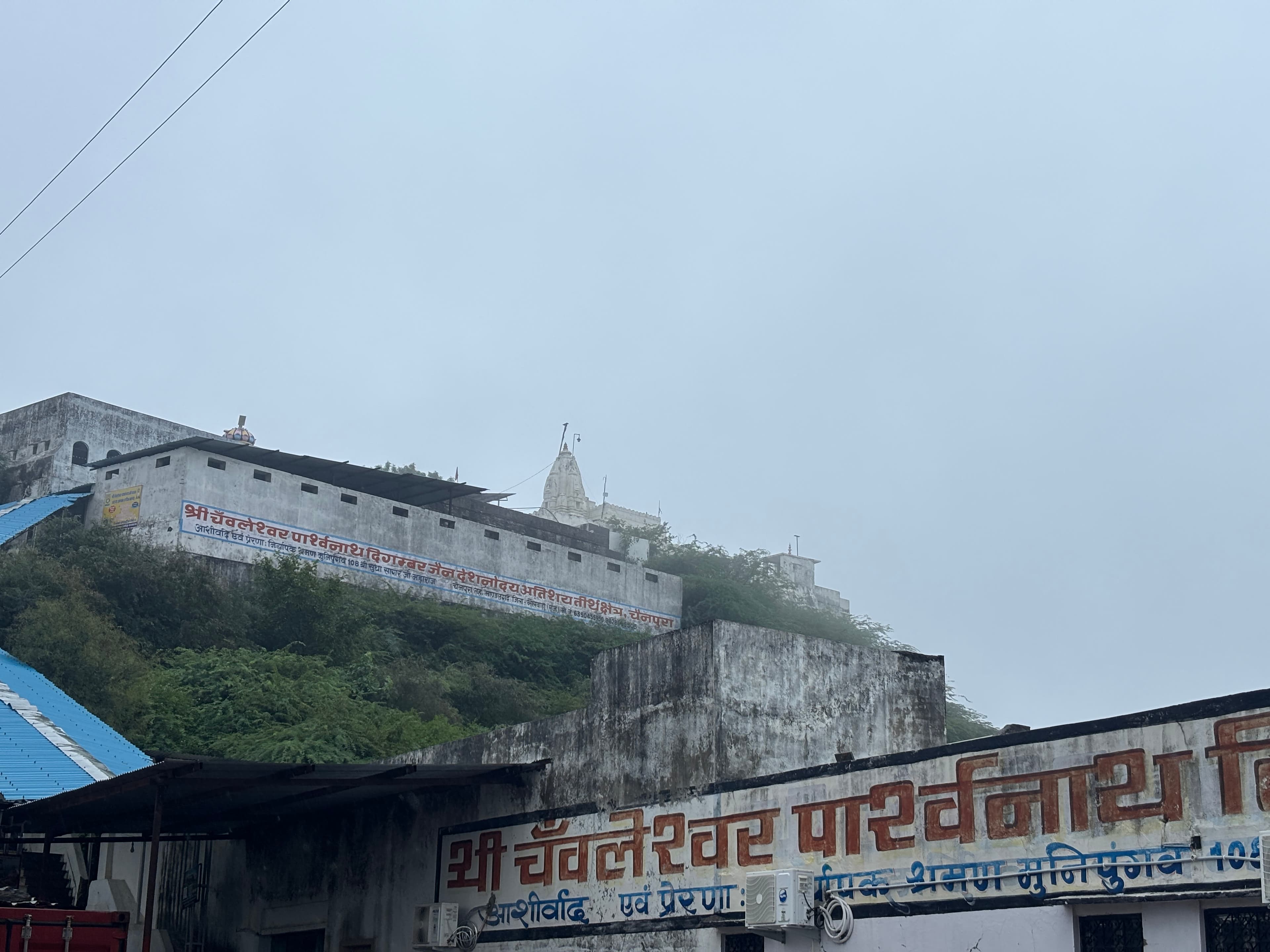
The Aravalli range has stoned hills and in these hills there is a village called Chainpura in Bhilwara district. In this village there is an old temple. This temple is called Shri Chanvaleshwar Parshvanath Digambar Jain Atishay Kshetra. For a thousand years Jain and non-Jain pilgrims have been going to this temple. People who go to this temple often call it Rajasthans Laghu Sammed Shikhar. They also call it a "mini Sammed Shikhar". This name shows how much people respect this temple in the hills. Shri Chanvaleshwar Parshvanath Digambar Jain Atishay Kshetra is really special, to them.
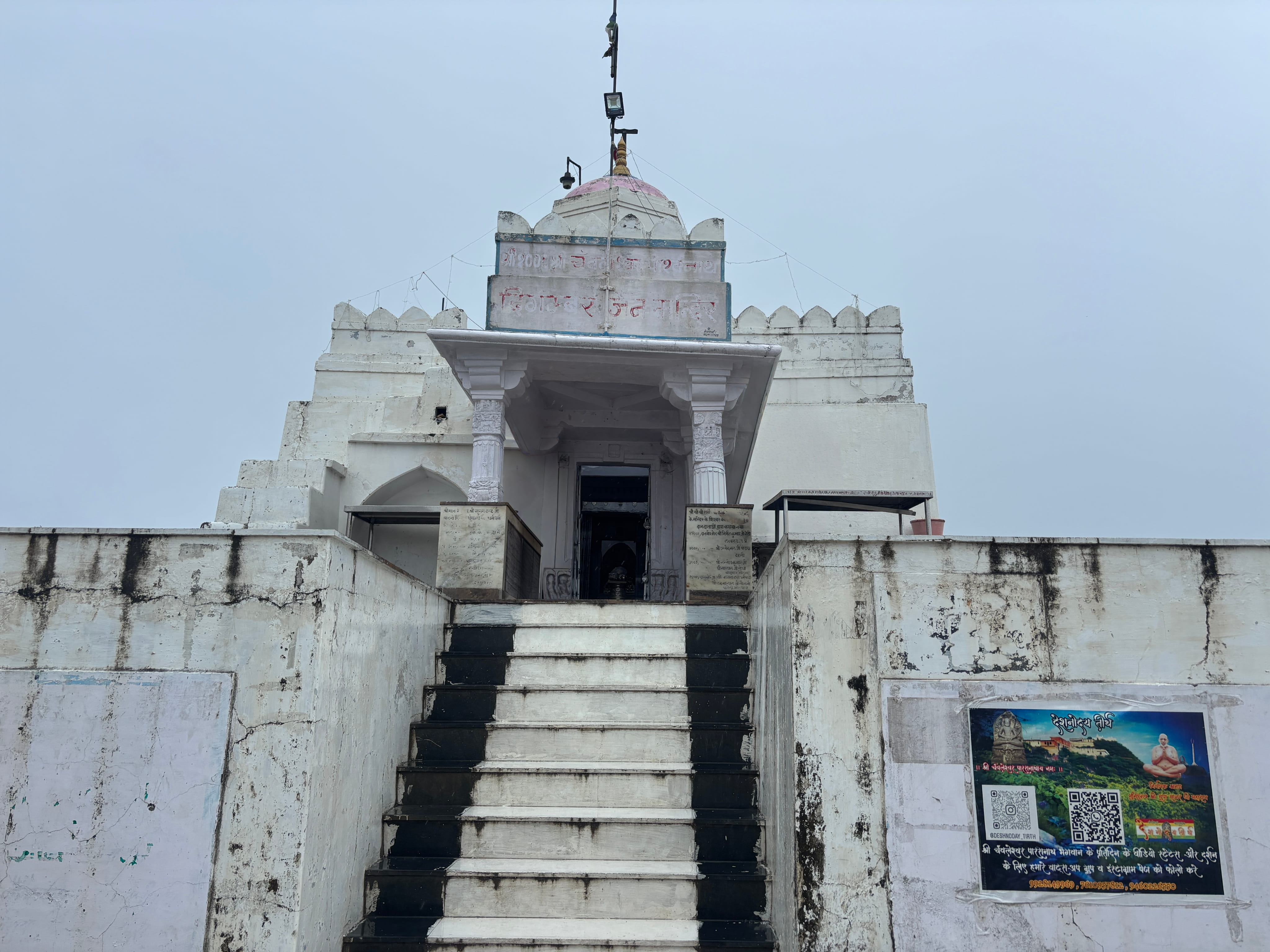
Image : Shree Chanvaleshwar Parshwanath Digambar Jain Atishay Kshetra.
A Hill Once Called Choolgiri
Long before it bore the name Chanvaleshwar, the hilltop on which the temple stands was known as Choolgiri. Local tradition, supported by inscriptions recovered from the nearby Bijolia Atishay Kshetra, holds that Bhagwan Parshvanath's Samavasaran — the divine assembly that forms wherever a Tirthankar attains omniscience and preaches — once graced this very hill. That belief alone made Choolgiri sacred ground long before any idol was discovered here, and it remains why the site draws devotion from Jains and non-Jains alike.
The Cow, the Cowherd, and the Dream
The temple's founding story begins, as so many Atishay Kshetra legends do, with an animal that refused to behave normally. About a thousand years ago, a cowherd employed by the Digambar Jain merchant Seth Nathmal Shah noticed something strange: every day, without fail, his master's cow would climb to a particular spot on the hill and release all her milk onto the ground there - returning home dry. When the cow stopped giving milk at the shed, Nathmal Shah asked the cowherd for an explanation, and together they observed the animal closely until the pattern was confirmed.
That very night, Seth Nathmal Shah reportedly had a vivid dream: a divine figure appeared to him and revealed that beneath the exact spot where the cow poured out her milk lay an idol of Bhagwan Parshvanath. The figure instructed him to unearth the murti and install it in a Jain temple.
The next morning, Nathmal Shah went to the site with his companions. After chanting the Namokar Mahamantra, they began to dig carefully - and from the earth emerged a serene, Veetragi (passion-free) image of Parshvanath, seated in the Padmasan posture. Overwhelmed, Nathmal Shah resolved on the spot to build a temple worthy of the idol. Construction was completed and the murti installed with a full Panch Kalyanak Pratishtha, performed according to Digambar Jain rites, on Vaishakh Shukla Dashami of Vikram Samvat 1272 - roughly 1215 CE - under a grand, tall shikhar.
Why "Chanvaleshwar"?
The temple's name has its own quiet story. Local belief holds that every stone in these hills is naturally black - which is why the area is known as Kali Ghati, or the "black valley." Against that backdrop, an idol that emerged from the same ground in a distinctly grey, chawla-stone hue stood out as an anomaly in itself. Because the murti is carved from chawla stone, it came to be known as Chanvaleshwar Parshvanath - and the surrounding shrine took the same name. In a landscape where black stone is the rule, a grey idol rising from underground is treated by devotees as an Atishay (wonder) all on its own.
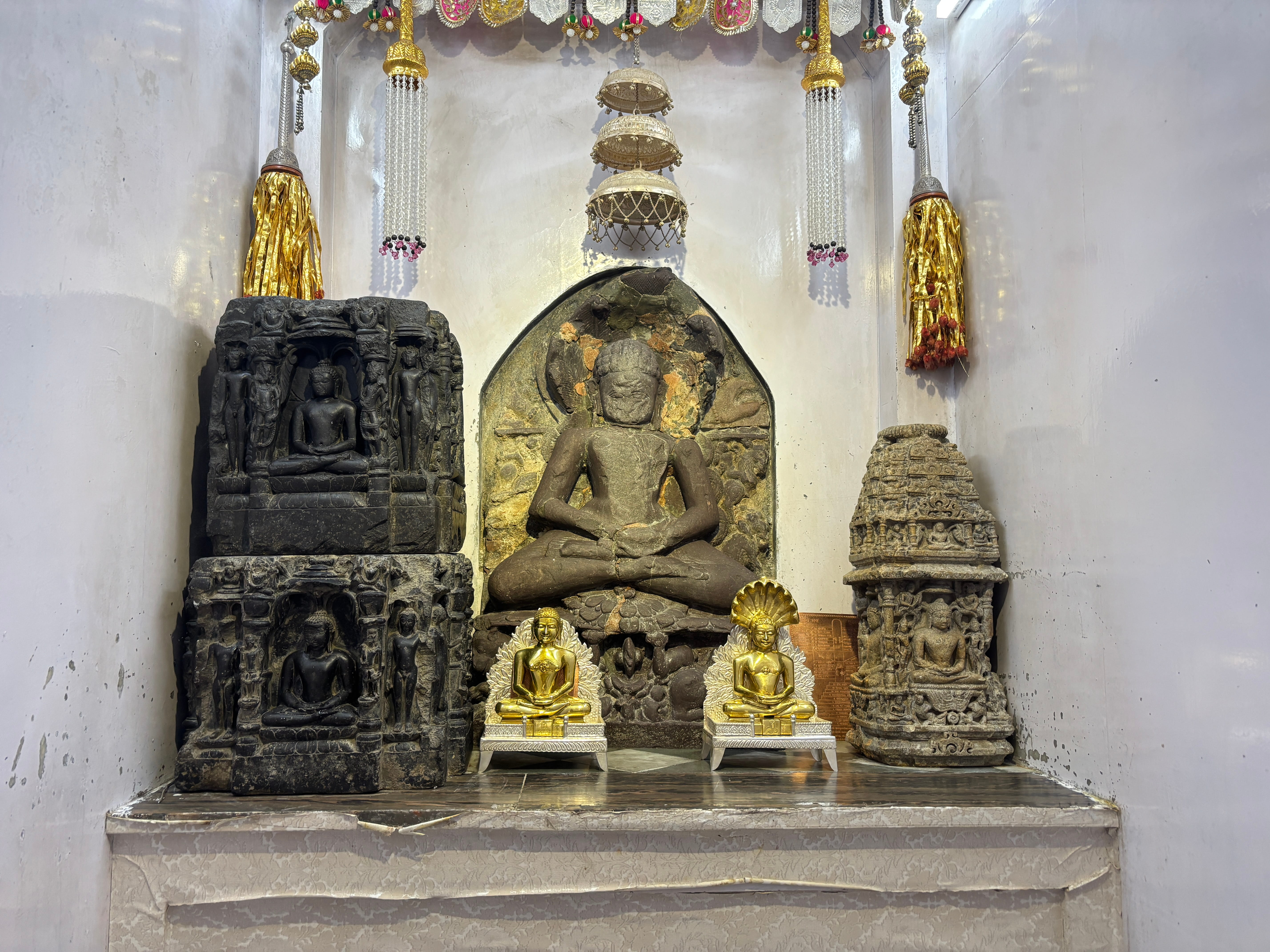
Image : Mulnayak Bhagwan Shree Parshwanath at Chanvleshwar Digmbar Jain Atishay Kshetra
A Living Tradition of Miracles
The Atishay Kshetra stays in peoples memory for a lot of reasons. It is not just because of where it came from. The Atishay Kshetra is also remembered because of all the miracles that people say happened there over the years. This is still happening today. There is one story that people tell a lot. This story was told by Shri Babulal Ji Jain from Awan. He talks about something that happened in June 1990. A group of pilgrims twelve people went to the temple. Shri Babulal Ji Jain was with them even though he was not feeling well. They had to climb 150 steps to get to the temple and it was very hot outside. After they finished praying and visiting the temple one of the women, Smt. Kamla Devi, got very thirsty. There was no water to drink at the temple. Shri Babulal Ji Jain called out for help. Someone answered from the forest. The voice said "just wait water is coming". Then a man with a turban appeared with cool water and gave it to Smt. Kamla Devi. Before Shri Babulal Ji Jain could even say thank you the man disappeared.
People who believe in the Atishay Kshetra also talk about times when someone tried to steal from the temple. Even though the thief damaged things around the temple they never touched the idol, the Moolnayak idol. The Atishay Kshetra also has a canopy above the idol that has never fallen down and people think this is a big miracle. Many people from over seventy villages around the Atishay Kshetra believe in these miracles. They worship the Chanvaleshwar Parshvanath idol as their family deity, the Kuldevata. This is something that both Jain and non-Jain people believe in. It brings them together. The Atishay Kshetra is a special place, for them.
New Construction, Continuing Legacy
The tirtha is currently undergoing significant expansion. Under the spiritual guidance of Param Pujya Tirtha Chakravarti Niryapak Shraman Muni 108 Shri Sudha Sagar Ji Maharaj, new construction is progressing at its own pace: a complex of 24 temples representing the Trikaal Chaubisi (the Tirthankars of the past, present, and future ages), a Sahastrakut Jinalaya, a large main temple (Bada Mandir), and a Sant Shala for resident monks. The tirtha kshetra also maintains arrangements for pilgrim accommodation and food.
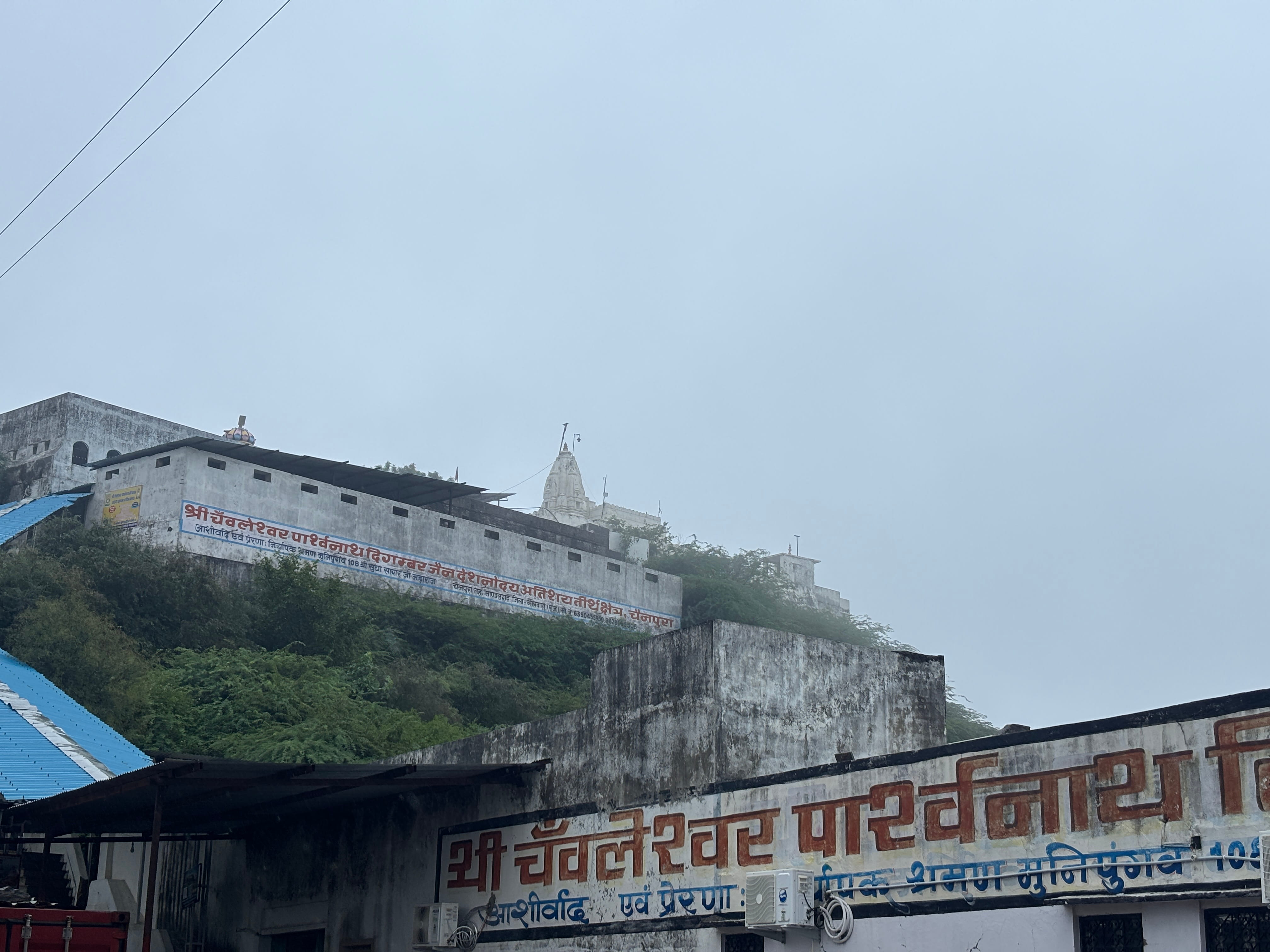
Image : Shree Chanvaleshwar Parshvanath Digambar Jain Atishay Kshetra
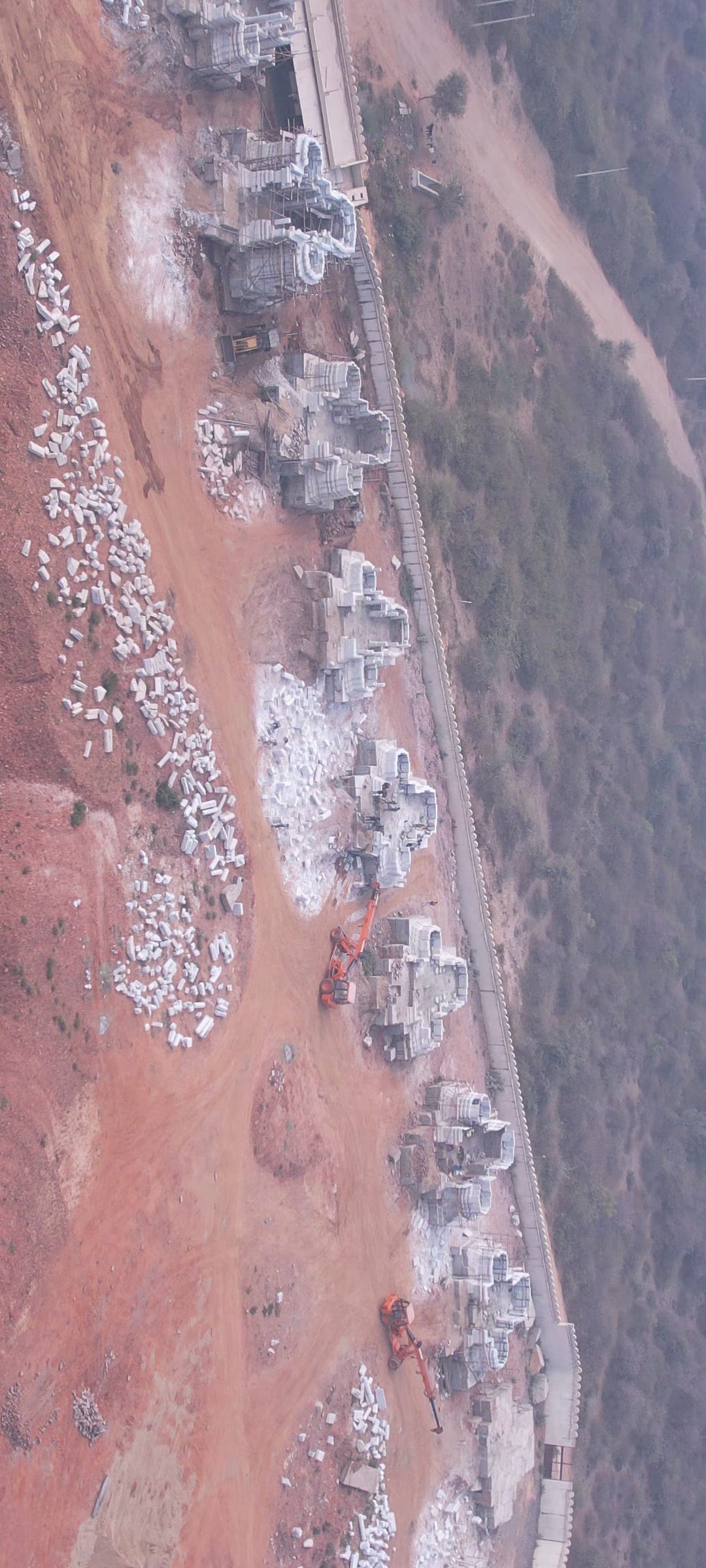
Image : New construction at chanvaleswar
Visiting Shri Chanvaleshwar Parshvanath
For pilgrims planning a visit, the temple sits atop a hill in the Kali Ghati region of the Aravalli range near Chainpura village in Bhilwara district, Rajasthan. The climb — traditionally described as around 150 steps — is part of the pilgrimage experience itself. Whether one comes for the ancient grey Padmasan idol, the ongoing new temple construction, or simply to sit in the stillness of a hill once visited by a Tirthankar's Samavasaran, Shri Chanvaleshwar Parshvanath Digambar Jain Atishay Kshetra offers a rare combination: an unbroken thousand-year lineage of faith, and a living, still-unfolding sacred landscape.