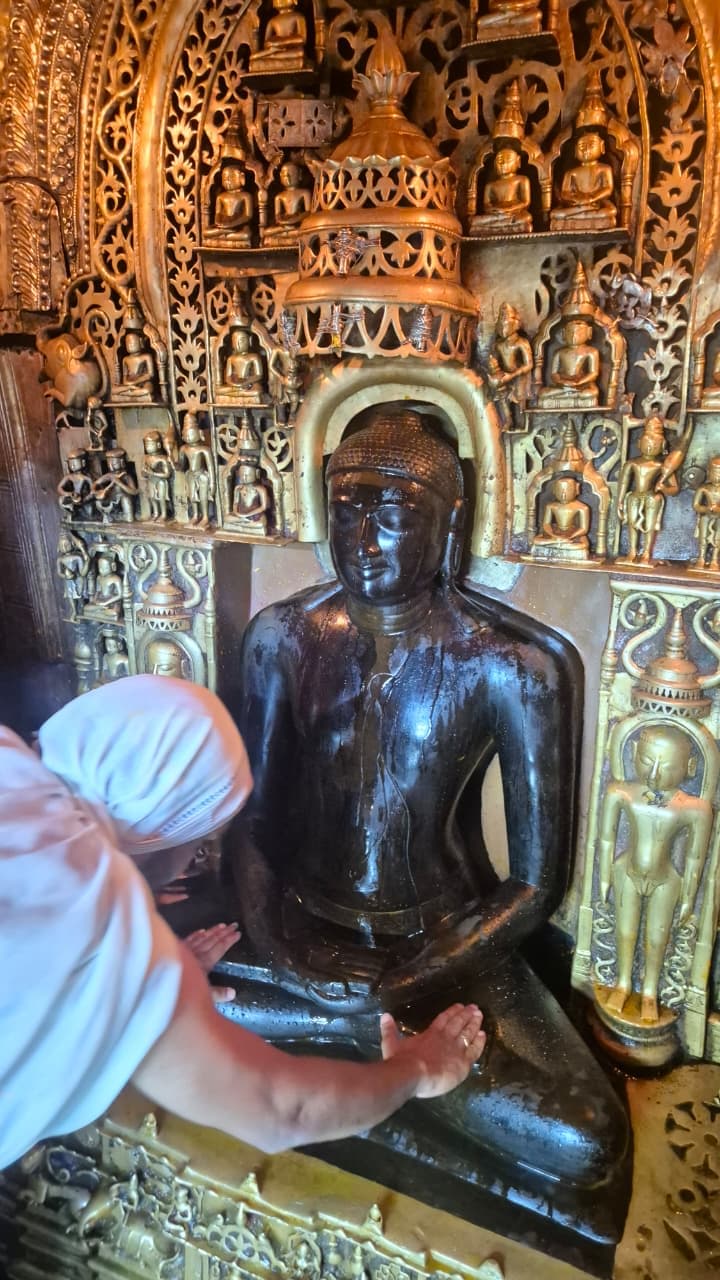
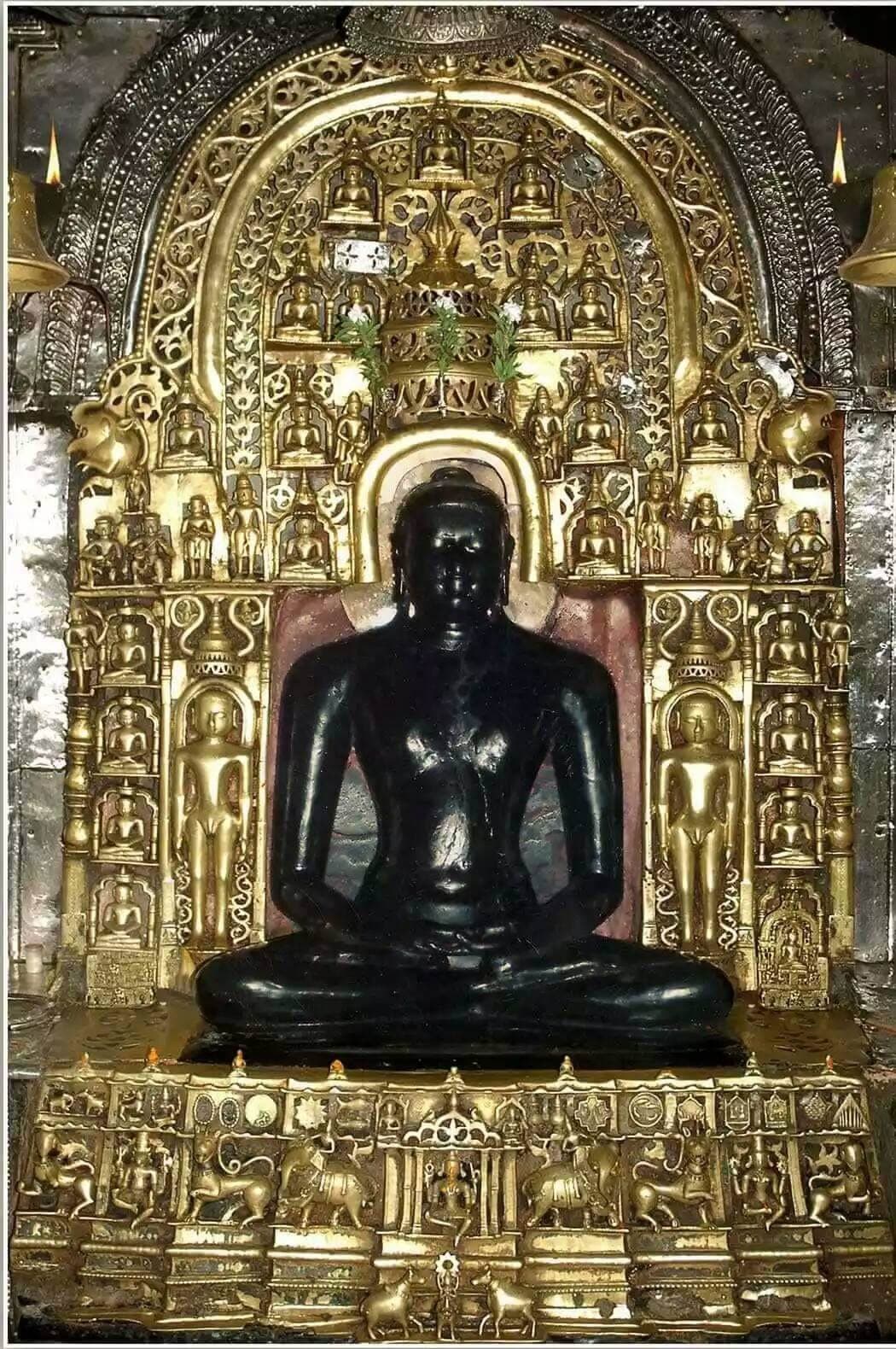
You must have heard this at some point, somewhere, that Ravan once came to Kesariyaji and had darshan of the pratima here. We heard this too and thought let us actually find out what the full story is.
So we started with the history books of Kesariyaji. We read a lot of books. Books by Jain authors and books by other authors as well. Not a single one of them mentioned this anywhere. We were surprised. Such a big claim and not one book talks about it.
Then we thought that since this is about Ravan, it must be mentioned in the Ramayan. So we looked in Ramcharitmanas written by Tulsidas and we also looked in the Jain Ramayan Padmapuran. Nothing there either.
Then we thought that if Ravan really had some connection with this temple then surely there would be something inside the temple itself. So we looked at every shilalekh in the temple. We looked at the inscriptions on the pratimas. We even looked at the shilpkala carefully. Still nothing.
So where did this story actually come from?
When We Dug Deeper
We found out that this same story is going around at Antariksh ji as well, that Ravan had darshan there too. And it is also going around in several Shwetambar temples. This story seems to have been started by some Shwetambar sadhu.
But why at Kesariyaji specifically? Maybe it is a conspiracy to take over the tirth.
The Pandas and Poojaris at Kesariyaji picked up this same story and they sell these made up stories to increase their business at the temple. It benefits them directly. When Hindu devotees come the offerings increase. They get boli. They get a share of the bhandar. If the temple administration goes to the Jain community then all of this stops for them. That is why these kinds of stories are made up and spread.
What Does History Actually Say
Here is something worth thinking about. The oldest shilalekh in the temple is from Vikram Samvat 1431. And if you look at the shilpkala of the pratima itself you will understand that this kind of pratima was made between Vikram Samvat 800 and 1200. There are other Digambar pratimas in India from that same period that look exactly like this one.
This pratima is thousands of years old. And there is absolutely no connection with Ravan anywhere in any historical document. Not in any shilalekh. Not in any Jain granth. Not in any Ramayan.
The Blog That Gave This Story Wings
This Ravan story really got momentum when a Shwetambar person named Arpit Jain who also calls himself a researcher wrote about it in his blog.
That blog has nothing but made up stories. There are no facts. No reference to any shilalekh. No citation from any granth. Just a story that sounds interesting and people keep sharing it.
Once something is written on the internet people start believing it is true. Especially when it is about a tirth and the story sounds exciting.
So What Is the Truth
The truth is that Kesariyaji has no connection with Ravan whatsoever. This story is simply a marketing tool being used by Shwetambars and Brahmin Pandas. The purpose is to take over this Digambar Jain tirth kshetra and run their business there.
When you tell a Hindu devotee that Ravan had darshan here they start coming. When you tell the Adivasi community that this is their Kalaji they come too. More people means more chhadawa. More boli. More earnings for the Pandas.
And when so many communities get attached to this temple it becomes even easier for the government to say that this is everyone's temple and it cannot be given to any one community.
This conspiracy has been carried out very cleverly.
What We Are Saying
We are not saying that Hindu or Adivasi communities are wrong. They believed what they were told. The fault lies with the people who deliberately spread false stories.
What we are saying is that if you want to know the truth then read the books. Look at the shilalekh. Understand the shilpkala of the pratima. History speaks for itself.
The shilalekh from Vikram Samvat 1431 clearly states that this temple was built and restored under the leadership of a Digambar Jain Bhattaraka. Before that also it was a Digambar tirth. And before that also.
The Ravan story has no proof anywhere. Not in any book. Not in any shilalekh. Not in the shilpkala. Not in the Ramayan. Not in any Jain granth.
What has no proof is not true.
Jai Adinath.