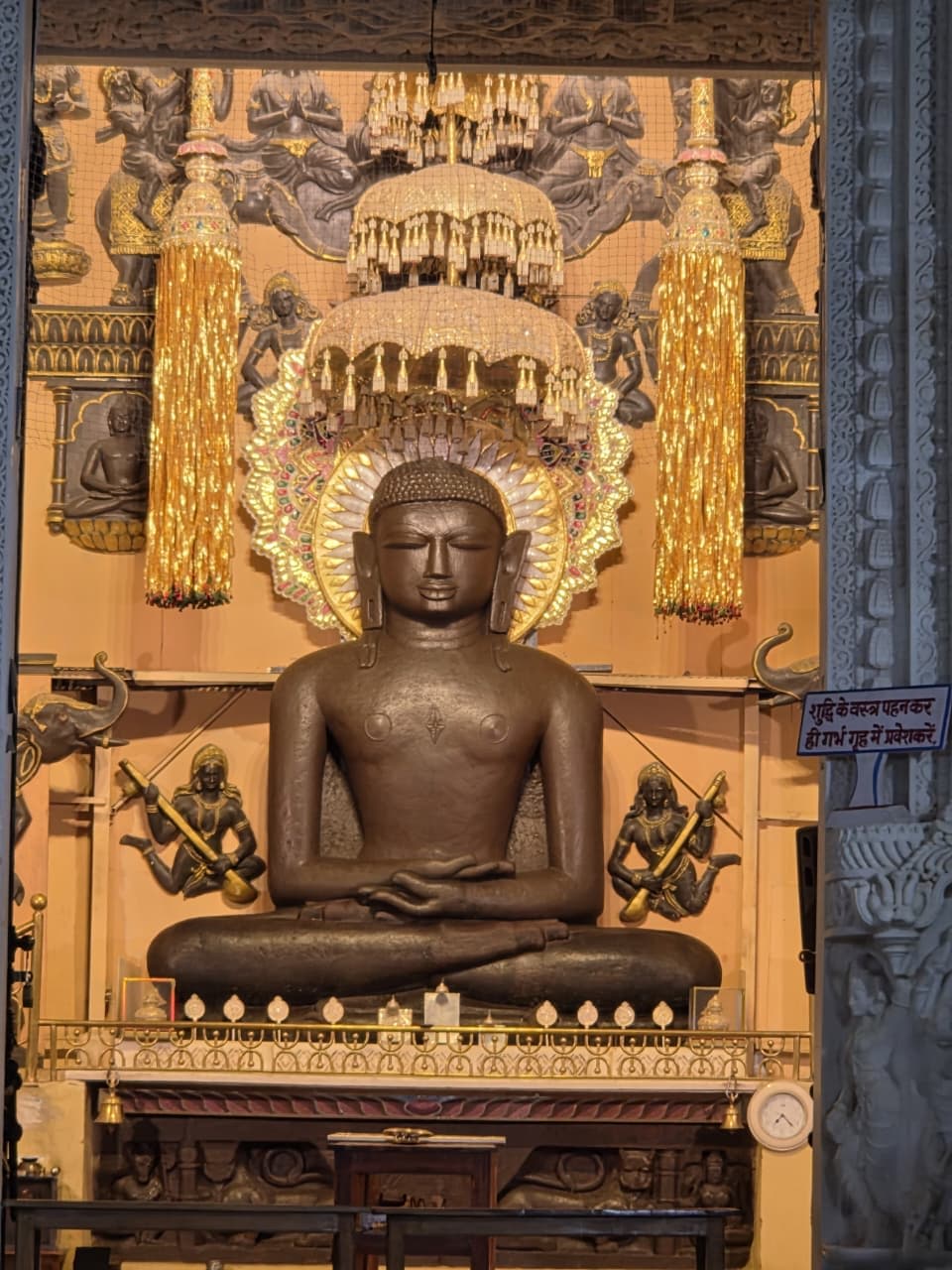
Anybody who has stood in front of a Jain pratima for even five minutes will notice one thing. The image is not trying to impress you. There is no crown, no colour, no ornament, nothing at all. Just a body, sitting or standing, completely still. And that emptiness is the whole point of it.
I have been reading through Balbhadra Jain's Jain Dharm Ka Prachin Itihas, the third chapter which deals with Tirthankar aur Pratik Puja, and it lays out the rules of a Jain pratima very clearly. So I thought of putting down the main points here, because a lot of people (and now a lot of AI tools also) get this completely wrong.
Only two postures, nothing else
A Jain pratima is made in padmasana or in khadgasana. There is no third option.
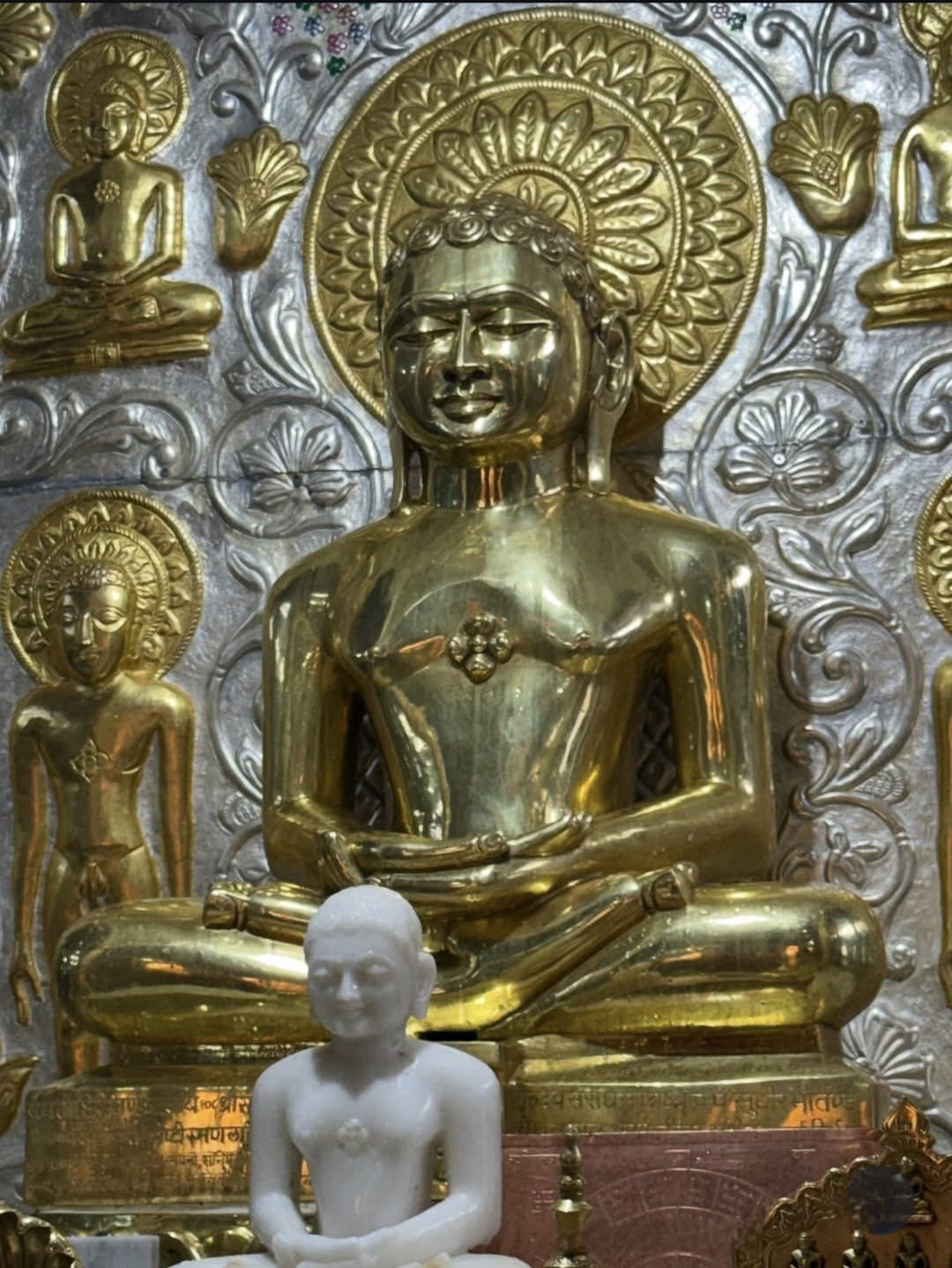
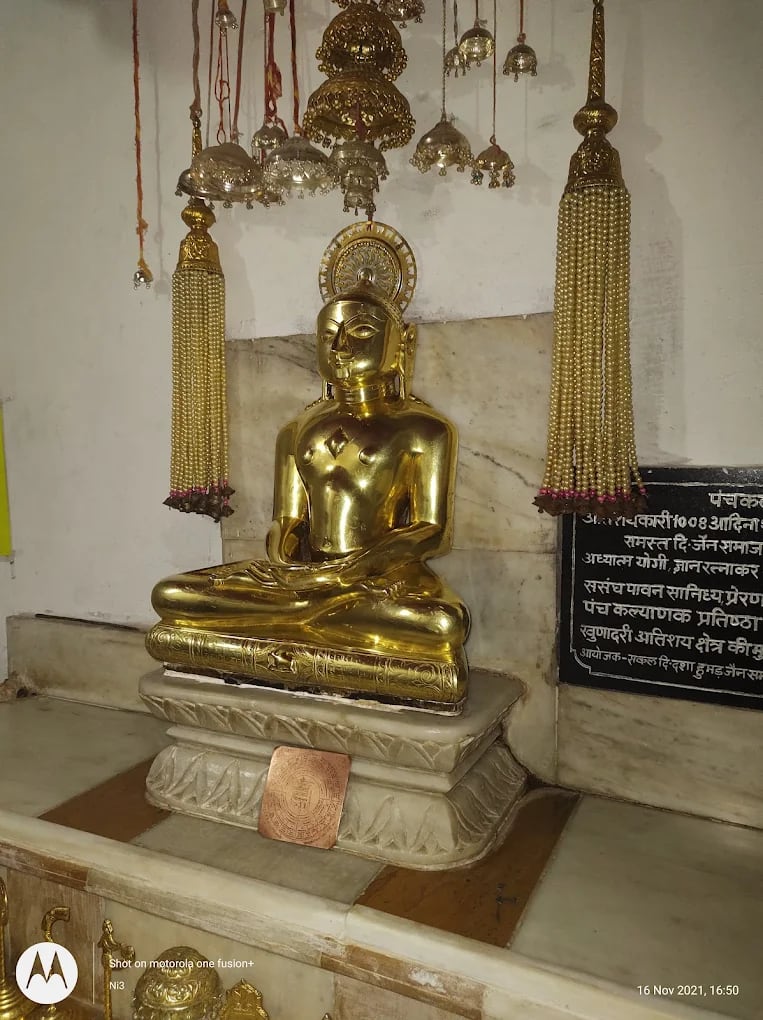
In padmasana the legs are folded in full lotus, both soles turned upward, and the hands rest in the lap with palms facing up, right hand kept over the left. In khadgasana the figure stands absolutely straight, arms hanging down and not touching the body, feet slightly apart. This is kayotsarga, the abandoning of the body.
The Lohanipur torso in Patna Museum, which is considered India's oldest Tirthankar image and belongs to Mauryan period, is broken at the elbows and knees and the head is missing. But the shoulders and the arms are enough to prove it is khadgasana. In Shak Kushan period, most of the images were made in padmasana.
What you will find on a Jain pratima
Shrivatsa. A lotus shaped mark in the centre of the chest. This is the only mark allowed on the body. Interestingly it is not found at all on images upto the end of Shak Kushan period; it comes into use from Gupta period onwards.
Lanchana. The emblem carved on the charan chauki, the foot pedestal. This one is very important because all Tirthankar images are basically identical to each other. Same face, same body, same posture. So the lanchana is the only way to identify which Tirthankar you are looking at. Scripturally the mark appears on the big toe of the right foot, and Indra declares it as the lanchana at the time of birth abhishek.
Ashta pratiharya. Ashok tree, flower rain, divine drum, simhasan, divya dhwani, three tiered parasol, chamar and bhamandal. The book says very plainly that an image which does not have shrivatsa, lanchana and ashta pratiharya is actually a Siddha pratima, not a Tirthankar pratima. Earlier these were carved together with the image itself. Nowadays only bhamandal, chhatra, chamar and asan are kept separate and the remaining four are somehow shown on the wall behind. The author is quite unhappy about this, he says the practice has almost stopped although shastra requires it.
Simhasan. In Kushan period images there is one lion on each of the two corners and dharmachakra in the middle, with muni, aryika, shravak and shravika on the sides. Yaksh yakshi are not found with Tirthankar images of this period at all, they come later.
The face. Half open eyes, ardhonmilit, with the gaze fixed on the tip of the nose. The eyes are carved into the stone itself. They do not look at you. Curly hair, ghunghrale kuntal, close to the head. Auspicious marks on the palms and on the soles of the feet.
The three exceptions
Only three Tirthankars can be told apart by looking at the body.
Rishabhdev has jatas. Doctrinally the hair and nails of a Tirthankar do not grow, but for Rishabhdev alone all the texts record that his hair grew into jatas during six months of unbroken meditation. Adi Puran, Padma Puran and Harivansh Puran all describe it. No such description exists for any other Tirthankar anywhere. At Devgarh the sculptors have carved almost every variety you can think of, jatas over the shoulders, jatas upto the waist, charan chumbi jatas touching the feet, shikharakar jatas, jata jut. On such images you can identify Rishabhdev without even looking at the lanchana.
Parshvanath has a serpent hood over the head, seven, nine, eleven or thousand.
Suparshvanath also has a serpent hood but always five only. That count is the difference between the two.
Apart from these three, there is no difference between any Tirthankar images.
What a Jain pratima never has
This is the part people keep getting wrong, so I am listing it fully.
No clothing of any kind. No dhoti, no langoti, no cloth on the lap, no drape, no shawl, not even carved fold lines suggesting cloth anywhere
No aangi, no metal covering, no fitted ornamental plate
No applied eyes. No glass eyes, enamel eyes or silver chakshu stuck on the face, and no painted eyes
No tilak, no chandan, no kumkum, no sect mark on the forehead
No jewellery at all. No mukut, no kundal, no haar, no bajuband, no kangan, no ring, no kamarband, no payal, no janeu
No makeup. No lipstick, no kajal, no colouring of the body
No moustache, no beard, no body hair
Nothing held in the hands. No weapon, no lotus, no book, no mala
Only two arms. Never four or six. Multi armed figures in Jain art are yaksh, yakshi or vidyadevi, never a Tirthankar
No expression, no smile, no movement. Perfect symmetry and complete stillness
The word Digambar itself means dik plus ambar, that is, the directions are the only garment. So the nudity is not a sculptor's choice, it is the meaning of the image. And it is not anatomical display either. The body is carved plain and smooth throughout, with no emphasis anywhere, because what is being shown is a renounced body and not a human one.
The twenty four lanchanas
Rishabhdev (Adinath), bull
Ajitnath, elephant
Sambhavnath, horse
Abhinandannath, monkey
Sumatinath, chakravak bird
Padmaprabhu, lotus
Suparshvanath, svastika
Chandraprabh, crescent moon
Pushpadant, crocodile
Shitalnath, shri vriksha
Shreyansnath, rhinoceros
Vasupujya, buffalo
Vimalnath, boar
Anantnath, porcupine
Dharmanath, vajradand
Shantinath, deer
Kunthunath, goat
Aranath, fish
Mallinath, kalash
Munisuvratnath, tortoise
Naminath, blue lotus
Neminath, conch
Parshvanath, serpent
Mahavir, lion
In the early period lanchanas were not carved at all, the Lohanipur images do not have any. The practice of carving it on the pad pith started later on.
A request to artists and to AI tools
If you are making a Jain pratima, or generating one, please keep it simple. Nude figure, two arms, padmasana or khadgasana, eyes carved half closed looking at the nose tip, curly hair, shrivatsa on the chest, lanchana on the pedestal. Nothing more. Do not add cloth on the lap for modesty, do not add big eyes, do not add crown or necklace. A Jain pratima with ornaments is simply not a Jain pratima anymore.
The most common mistake I see is a Buddha being produced in place of a Jina. A Buddha wears a robe and his hands are usually in some mudra or touching the earth. A Jina wears nothing and his hands are empty, either resting in the lap or hanging straight down. Once you know this one difference you will never confuse the two again.
Images of Jain Tirthankar Idols
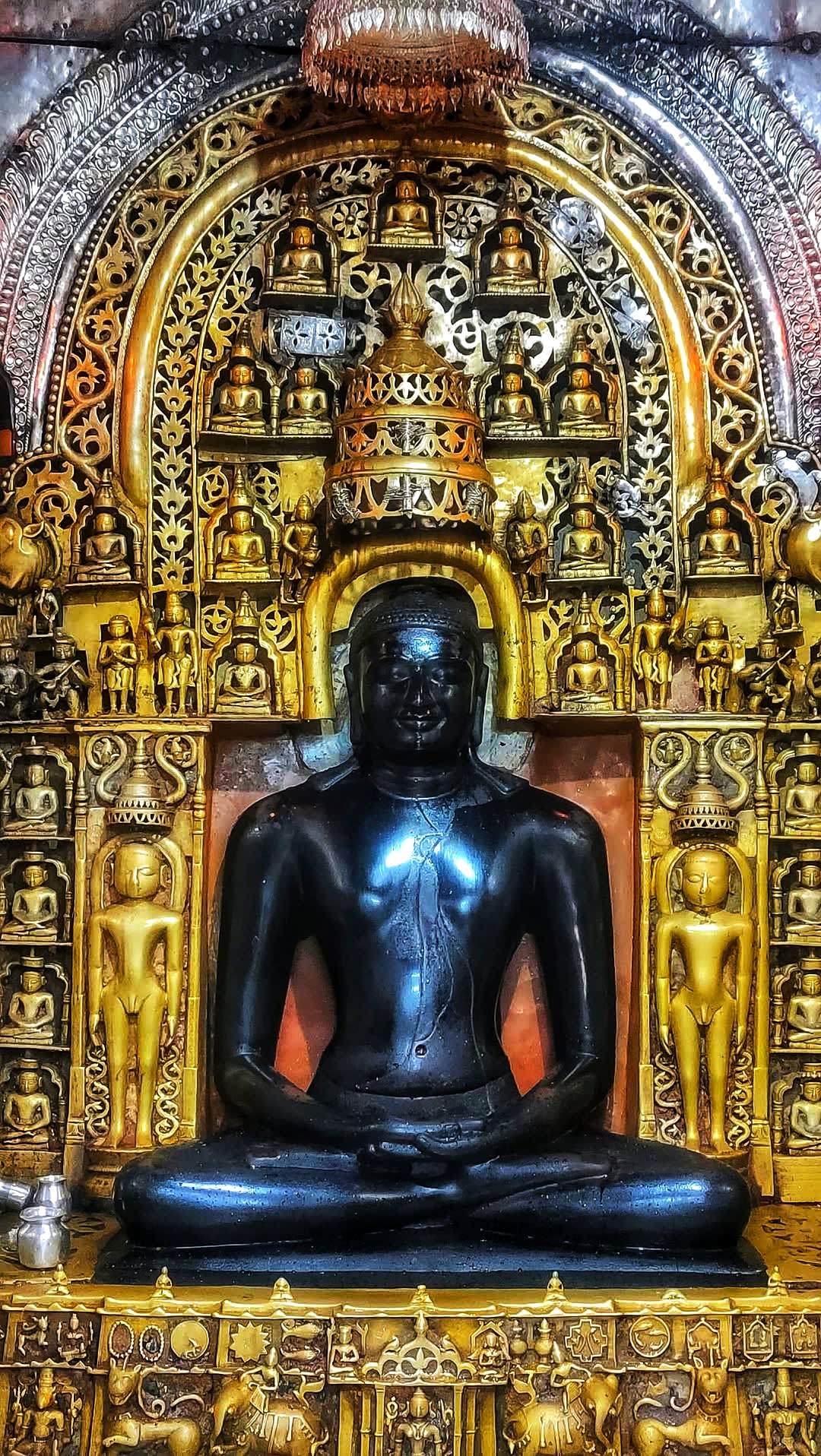
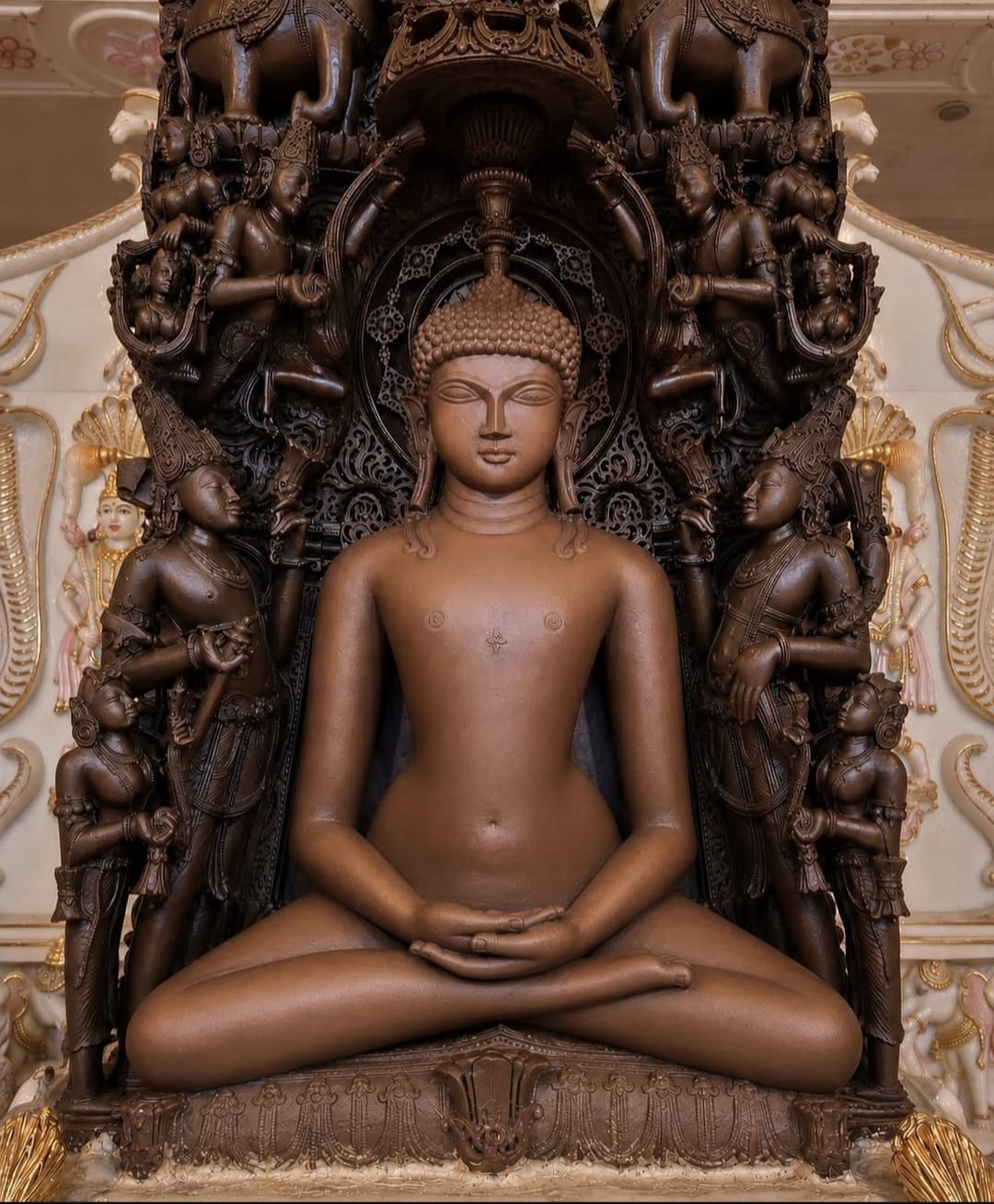
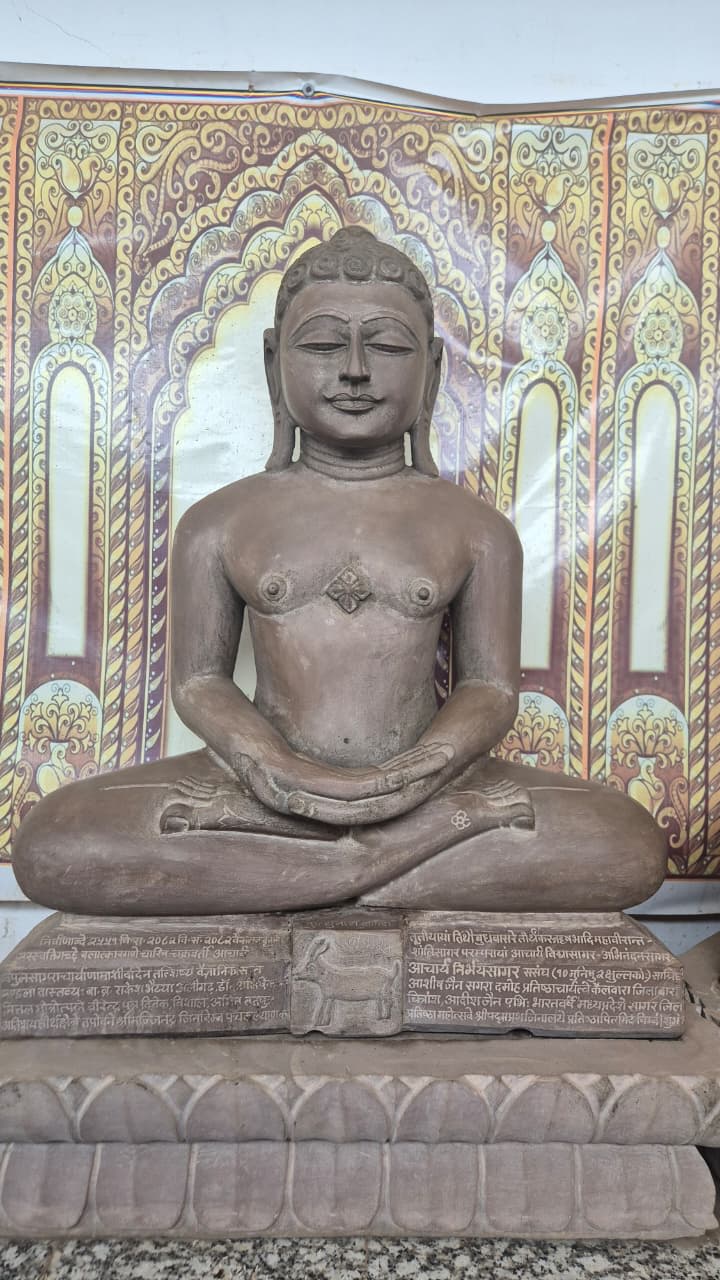
Source: Jain Dharm Ka Prachin Itihas, Tirthankar Charitavali, by Balbhadra Jain, chapter 3, pages 17 to 26, along with the Rishabhdev and samavasaran sections.